
Baby Cache Crib Manual: A Comprehensive Guide
Navigating Baby Cache crib ownership requires understanding assembly, safety, and maintenance—this guide consolidates crucial information, including recalls and support resources.
Proper use ensures a safe sleep environment for your child, addressing potential hazards and growth adaptability of convertible models.
Understanding Baby Cache Cribs
Baby Cache cribs, now largely under the Delta Children brand, are known for their convertible designs, growing alongside a child from infancy through youth. These cribs often feature adjustable mattress heights, crucial for newborn safety and evolving developmental stages.
However, it’s vital to be aware of past recalls, particularly concerning drop-side models—identified as suffocation hazards—dating back to around 2010 with brands like Simmons.
Modern Baby Cache cribs prioritize safety and longevity, but diligent assembly following provided instructions is paramount. Failure to do so can compromise structural integrity and potentially create unsafe conditions.
Safety First: Key Considerations
Prioritizing safety with a Baby Cache crib involves meticulous hardware checks for looseness, damage, or missing parts—both during and after assembly. Regularly inspect joints for stability, addressing any issues immediately.
A critical height and weight limit exists: discontinue crib use when the child can climb out or reaches 35 inches (89cm), transitioning to a youth or regular bed.
Avoid using potentially hazardous older models, especially those with drop-sides, due to suffocation risks. Adequate mattress support, potentially requiring additional slats, is non-negotiable for a secure sleep surface.
Drop-Side Crib Hazards & Recalls
Drop-side cribs pose significant suffocation hazards due to potential entrapment in the hardware, leading to recalls—particularly Simmons models around 2010. These cribs, often rebranded as Delta, present a serious risk to infant safety.
The Consumer Product Safety Commission (CPSC) issued warnings and recalls due to child deaths linked to drop-side mechanisms. Discontinue use of any drop-side crib immediately, opting for a fixed-side model instead.
Ensure your Baby Cache crib is not a recalled model; contact Delta Children for information and potential remedies if concerns arise.
Locating the Manual
Finding your Baby Cache crib manual is crucial for safe assembly and usage. Begin with the official Baby Cache (Delta Children) website, exploring their archives for downloadable PDFs.
If the website lacks your specific model, explore third-party manual repositories and online archives like the Wayback Machine. Searching for your crib’s model name (e.g., Windsor, Heritage) can yield results.
Contact Delta Children’s customer service directly to request a copy; Babies R Us may also offer assistance.
Official Baby Cache Website & Archives
The primary source for your Baby Cache crib manual is the official Delta Children website, as Baby Cache is now under their ownership. Navigate to their support or product registration sections.
Look for a dedicated “Manuals” or “Instructions” area, often searchable by model number or name. Downloadable PDFs are typically available for free, offering detailed assembly guides.
Check for archived manuals if your crib is an older model; Delta Children may retain resources for discontinued lines.
Third-Party Manual Repositories
When the official website lacks your specific Baby Cache crib manual, explore third-party repositories. Websites like ManualsLib and similar platforms often host user-submitted documentation.

The Internet Archive’s Wayback Machine is invaluable for locating archived versions of the original Baby Cache website, potentially containing older manuals no longer available elsewhere.
Be cautious when downloading from unofficial sources; verify the manual’s authenticity and ensure it matches your crib model before assembly.
Crib Assembly Instructions
Successful assembly hinges on carefully identifying all included parts, referencing the parts list provided within the kit. The manual details a step-by-step process, emphasizing correct hardware usage for each stage.
Pay close attention to diagrams and instructions, ensuring proper alignment and secure fastening of all components. Failure to follow recommended procedures can compromise crib stability and safety.
Remember that additional slats may be required to provide adequate mattress support, and are not always included in the initial kit.
Identifying Parts: What’s Included in the Kit
Typically, a Baby Cache crib kit contains two wooden bed rails and four wooden slats, alongside necessary hardware and the instruction manual itself. However, it’s crucial to verify the contents against the parts list included within your specific model’s packaging.
Be aware that additional slats are often sold separately and must be purchased to ensure adequate mattress support. Carefully inventory all components before beginning assembly to identify any missing pieces.
The manual will display a comprehensive list for easy cross-referencing.
Step-by-Step Assembly Process
Carefully follow the provided instruction manual—failure to assemble correctly can compromise crib stability and safety. Begin by identifying all parts and laying them out for easy access. Assemble the bed rails, ensuring secure connections with the provided hardware.
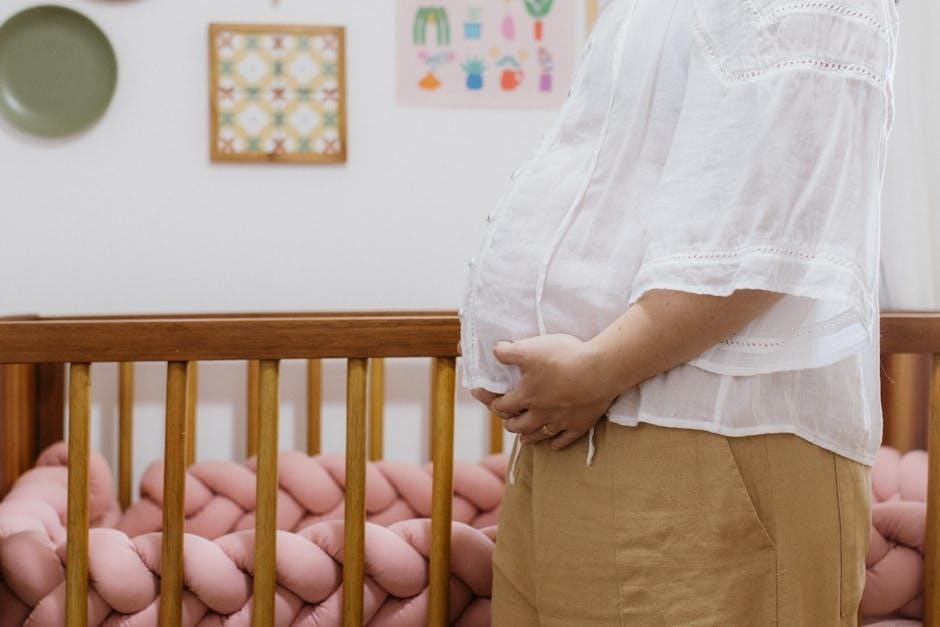
Next, attach the mattress support, verifying proper alignment. Double-check all bolts and fasteners for tightness. Remember, a properly assembled crib is paramount for your baby’s well-being; take your time and review each step.
Mattress Support & Height Adjustment
Baby Cache cribs offer adjustable mattress heights to accommodate your growing infant. Utilize the highest position initially for newborns, minimizing bending and easing lifting. As your baby begins to sit or pull up, lower the mattress to prevent climbing and potential falls.
Ensure adequate mattress support; additional slats may be necessary for optimal firmness. Regularly check the support system for stability. Stop crib use when the child reaches 35 inches (89cm) or can climb out.
Using the Highest Position for Newborns
For the convenience of parents with very young babies, the Baby Cache crib’s mattress support should initially be set to its highest position. This elevation reduces bending and straining when placing the newborn inside, simplifying caregiving tasks.
Maintaining close proximity to the infant is easier with this setting. However, remember this is a temporary configuration; adjust the height as the baby develops and begins to show signs of mobility, like sitting or pushing up.
Adjusting the Mattress Height as Baby Grows
As your baby gains mobility—sitting, pushing up, or attempting to stand—lower the mattress height accordingly. This crucial adjustment prevents accidental falls and ensures continued safety within the crib. Regularly reassess the setting to match your child’s developmental milestones.
Lowering the mattress also minimizes the risk of climbing and escaping. Always ensure the mattress is securely positioned at the chosen height, with no gaps around the sides. Prioritize safety with each adjustment.
Growth & Convertibility

Baby Cache convertible cribs are designed to adapt alongside your growing child, offering extended usability and value. These models transition from a safe infant crib to a toddler bed, and often further into a full-size bed with the addition of conversion kits.
This adaptability eliminates the need to purchase new furniture as your child reaches different developmental stages. Explore available conversion kits to seamlessly transform the crib, ensuring a consistent and familiar sleep environment throughout childhood.
Baby Cache Convertible Crib Features
Baby Cache convertible cribs boast multi-functional designs, typically evolving through three or four stages. Initially, they serve as standard cribs with adjustable mattress heights. Transitioning to the toddler bed phase often involves removing one side rail, creating a safe and accessible lower sleeping space.

Further conversion to a full-size bed requires a separate conversion kit, utilizing the crib’s existing structure. These features maximize the crib’s lifespan and provide a cost-effective solution for changing sleep needs as your child grows.
Maintenance & Inspection
Regular maintenance is vital for ensuring continued safety and stability of your Baby Cache crib. Before and after assembly, and periodically thereafter, thoroughly inspect all hardware, checking for loose bolts, damaged components, or sharp edges. Pay close attention to joints, ensuring they remain tight and secure.

Address any loose joints immediately, tightening fasteners as needed. Consistent inspection helps prevent potential hazards and extends the crib’s lifespan. Failure to properly assemble or maintain the crib could compromise its structural integrity;

Regular Hardware Checks
Consistent hardware checks are paramount to crib safety. Routinely examine all bolts, screws, and fasteners, ensuring they are securely tightened. Look for signs of wear, corrosion, or damage to any metal components. Inspect the bed rails and mattress support for stability and proper alignment.
Tighten any loose hardware immediately to maintain structural integrity. Document your checks to track maintenance. A proactive approach prevents potential hazards and ensures a safe sleep environment for your baby. Ignoring these checks could lead to instability.
Identifying and Addressing Loose Joints
Loose joints compromise crib stability and pose a safety risk. Regularly inspect where wooden pieces connect, feeling for any wobble or movement. Pay close attention to the corners and areas supporting the mattress. A loose joint indicates potential structural weakness requiring immediate attention.
Tighten any connecting hardware, but avoid over-tightening, which can strip screws. If tightening doesn’t resolve the issue, discontinue use and contact Baby Cache/Delta Children for guidance. Addressing loose joints promptly is crucial for maintaining a secure sleep environment.
Fall Hazard Prevention
Recognizing a child’s developmental milestones is key to preventing falls. A crucial safety measure is to stop using the crib when your baby begins to climb out or reaches a height of 35 inches (89cm), whichever comes first.
Transitioning to a youth or regular bed at this point is essential. Regularly assess your child’s abilities and the crib’s stability. Never elevate the mattress to compensate for climbing attempts, as this creates a greater fall risk. Prioritize a safe sleep environment.
Recognizing When to Transition to a Bed
Transitioning from a crib isn’t age-dependent, but ability-based. Watch for signs your child is actively trying to climb out, demonstrating increased mobility and determination. Reaching a height of 35 inches (89cm) is another critical indicator, regardless of age.
Consistent climbing attempts signal it’s time for a bed, even if it seems early. Prioritize safety; a fall from a crib can cause serious injury. A timely transition ensures continued safe sleep practices.
Height and Climbing Limits (35 inches/89cm)
Baby Cache cribs have a defined height and climbing limit for safe usage. Once your child reaches 35 inches (89cm) in height, or begins attempting to climb out of the crib, it must be discontinued. This limit isn’t a suggestion, but a crucial safety guideline.
Continuing crib use beyond this point presents a significant fall risk. Immediately transition your child to a toddler or regular bed to prevent potential injuries. Regular monitoring of your child’s height is essential.
Additional Slats & Support
Adequate mattress support is paramount for infant safety within a Baby Cache crib. The included slat kit may not provide sufficient support as your baby grows, necessitating the purchase of additional slats.
Insufficient support can create dangerous gaps and potential entrapment hazards. Always ensure the mattress is firmly supported across the entire crib surface. Additional slats MUST be purchased to maintain optimal safety standards and prevent falls or injuries. Prioritize a secure sleep environment.
Importance of Adequate Mattress Support
A firmly supported mattress is critical for preventing suffocation and entrapment risks within the Baby Cache crib. Gaps between the mattress and crib sides pose a severe hazard to infants.
Consistent, even support across the entire mattress surface is non-negotiable. This ensures your baby remains safely positioned during sleep. Failure to provide adequate support compromises the crib’s safety features and could lead to tragic accidents. Regularly inspect and reinforce support as needed.
Purchasing Additional Slats
Baby Cache cribs often require supplemental slats to guarantee optimal mattress support, especially as the baby grows. The included kit may not provide sufficient support for long-term use or larger infants.
Contact Baby Cache/Delta Children directly or explore authorized retailers to acquire compatible replacement slats. Ensure the slats match your specific crib model for a secure fit. Prioritize safety by never using non-approved or makeshift slats; proper support is paramount for preventing falls and entrapment.
Troubleshooting Common Issues
Assembly difficulties and missing parts are frequently reported with Baby Cache cribs. First, carefully review the parts list to confirm all components are present. If parts are missing, contact Delta Children’s customer service immediately to request replacements.
For assembly challenges, re-examine the instructions and ensure correct orientation of each piece. Online forums and archived manuals (like those found via the Wayback Machine) can offer additional guidance. Failure to assemble correctly compromises safety.

Missing Parts & Hardware
Discovering missing components during Baby Cache crib assembly is a common frustration. Immediately halt assembly and meticulously compare received parts against the kit’s detailed parts list included in the manual. Contact Delta Children’s customer service – they are the manufacturer and can swiftly dispatch replacements.
Document the missing item(s) clearly when contacting support. Retain all packaging materials as proof of purchase and potential return. Do not attempt to substitute hardware; use only manufacturer-approved replacements to maintain crib integrity and safety.
Difficulty with Assembly
Encountering challenges during Baby Cache crib assembly is not uncommon. First, re-examine the instruction manual, ensuring each step is followed precisely – failure to assemble correctly compromises safety. Double-check all connections and hardware alignment before tightening.
If issues persist, contact Delta Children’s customer service for guidance; they can offer clarification or troubleshooting assistance. Online forums and archived instructions (like those found via web searches) may also provide helpful insights from other parents.
Customer Service & Support
For direct assistance with your Baby Cache crib, contacting Delta Children is paramount. They handle Baby Cache inquiries and can provide replacement parts or instructions. Babies R Us, while potentially helpful in the past, may have limited current support.
Locate Delta Children’s contact information on their official website. Be prepared to provide your crib model number and purchase details. Customer service can assist with missing parts, assembly questions, and understanding safety recalls, ensuring a secure sleep environment.
Contacting Baby Cache/Delta Children
Reaching Delta Children, the current parent company of Baby Cache, is vital for support. Unfortunately, specific phone numbers aren’t readily available online, emphasizing the importance of their website. Expect to navigate their support section for contact forms or email addresses.
Prepare your crib’s model number and proof of purchase for a smoother interaction. Delta Children can furnish instructions, address hardware concerns, and clarify recall information. Prompt communication ensures your baby’s safety and a correctly assembled crib.
Babies R Us Assistance (Potential Resource)
While Babies R Us’s current accessibility is limited, it historically served as a valuable resource for Baby Cache products. Some individuals have suggested contacting them for manufacturer phone numbers or assistance locating instructions. However, availability of support may vary significantly depending on location and current store operations.
Consider this a secondary option if direct contact with Delta Children proves challenging. Staff may possess knowledge of older models or be able to direct you to relevant resources. It’s worth a try, but manage expectations regarding immediate assistance.
Understanding Crib Standards & Regulations
Baby Cache cribs, now under Delta Children, must adhere to stringent safety standards set by governing bodies. These regulations focus on slat strength, hardware security, and overall structural integrity to minimize risks like entrapment or falls. Drop-side cribs, like some older Simmons models (later Delta), faced recalls due to suffocation hazards.
Ensure your crib meets current CPSC guidelines. Regular inspection for loose hardware, damaged parts, and proper assembly is crucial for compliance and, most importantly, your baby’s safety.
Safe Sleep Practices with a Baby Cache Crib

Prioritize a bare sleep environment: firm mattress, fitted sheet, and no loose blankets, pillows, or toys within the Baby Cache crib. Always place your baby on their back to sleep, reducing the risk of SIDS. Utilize the highest mattress position initially for easy access, but lower it as your baby begins to pull up.
Discontinue crib use when the child reaches 35 inches (89cm) or can climb out—whichever comes first. Consistent monitoring and adherence to safe sleep guidelines are paramount.

Alternative Safe Sleep Solutions
If a suitable Baby Cache crib isn’t immediately available, or while saving for one, consider a safe box as a temporary sleep solution, mirroring Finnish practices. Ensure the box is firm, flat, and appropriately sized for the infant. This provides a secure, defined sleep space.
However, a safe box is strictly a short-term measure. Prioritize acquiring a compliant crib as soon as feasible, adhering to all safety standards and guidelines for long-term infant sleep safety.
Using a Safe Box as a Temporary Solution
Inspired by Finnish tradition, a sturdy cardboard box can serve as a brief, safe sleep space when a crib isn’t immediately accessible. The box must be firm, flat, and free of any handles or loose parts that could pose a hazard.
Ensure adequate ventilation and place the box on a level surface, away from potential dangers. This is a temporary fix; a compliant crib is essential for long-term infant safety and should be prioritized.
Crib Model Specifics (Windsor Lifetime Crib Example)
The Baby Cache Windsor Lifetime Crib, a popular convertible model, requires diligent assembly following included instructions for optimal safety and functionality. Users report relatively easy assembly, but emphasize the necessity of purchasing additional slats to ensure adequate mattress support.
Online forums, like BabyCenter, showcase user experiences and potential solutions to assembly challenges. Archived instructions may be found online, aiding in locating specific details for this model’s setup and conversion stages.
Finding Archived Instructions (Heritage Crib Example)
Locating manuals for discontinued Baby Cache models, like the Heritage Crib, often requires exploring internet archives. Web Archive ([https://web.archive.org/web/20130525122214/http://babycache.com:80/site/pdf/Heritage%2007/Heritage%20crib-eng-ARI.pdf](https://web.archive.org/web/20130525122214/http://babycache.com:80/site/pdf/Heritage%2007/Heritage%20crib-eng-ARI.pdf)) provides a snapshot of the original documentation.
These archived PDFs contain crucial assembly instructions and parts lists, vital for safe crib reconstruction or repair. Remember to verify the manual’s applicability to your specific Heritage Crib version before proceeding with assembly.
Important Notices & Warnings
Always meticulously inspect the Baby Cache crib for damaged hardware, loose joints, or missing parts before and after each assembly and throughout its use.
Failure to assemble the crib precisely as instructed can compromise its structural integrity and create safety hazards. Discontinue crib use immediately when a child can climb out or reaches 35 inches (89cm).
Never use a drop-side crib due to suffocation risks; recalls began around 2010.